
NEWSROOM
-
FUSCC’s TORCH‑E Study Published in Clinical Cancer Research: 72.7% Complete Response Rate in Early Low Rectal Cancer
Radiotherapy plays a key role in organ‑preserving treatment for rectal cancer. Professor Zhen Zhang and her team in the Department of Radiation Oncology at Fudan University Shanghai Cancer Center (FUSCC) have long been dedicated to improving radiotherapy outcomes and functional preservation in rectal cancer. By optimizing precise dose delivery and treatment sequencing, the team strives to offer patients a chance of “cure without surgery.” Their latest achievement, the TORCH‑E study, has been published in Clinical Cancer Research. The study demonstrates that combining short‑course radiotherapy with chemotherapy and immunotherapy can significantly improve treatment outcomes, promoting a shift in rectal cancer management—from “tumor removal” to “tumor eradication with organ preservation.”
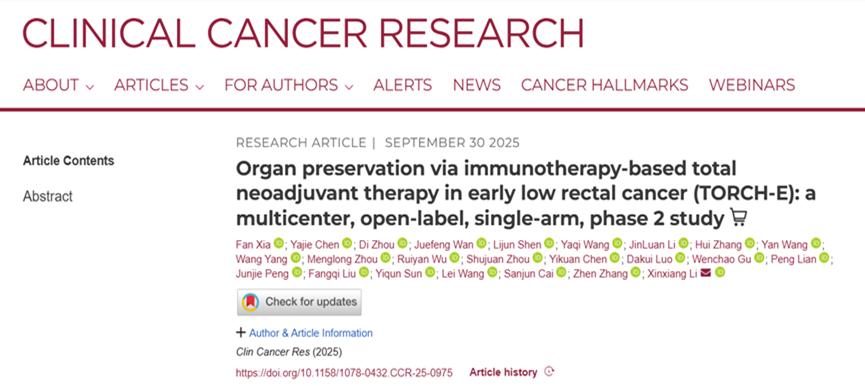
The TORCH‑E Study Published in Clinical Cancer Research
Co‑led by Professor Xinxiang Li’s team (Department of Colorectal Surgery II) and Professor Zhen Zhang’s team (Department of Radiation Oncology) at FUSCC, the study shows that a neo-adjuvant regimen of short‑course radiotherapy followed by chemotherapy and immunotherapy achieves a 72.7% complete tumor response rate and a 60.6% organ preservation rate in patients with early low rectal cancer. This result provides a high‑quality, non‑surgical treatment alternative for eligible rectal cancer patients.
The TORCH‑E study enrolled 33 patients with tumors located within 5 cm of the anal verge. All patients received five days of short‑course radiotherapy, followed by four cycles of chemotherapy plus immunotherapy. Key outcomes include: 87.9% of patients completed all planned treatment; 72.7% achieved a complete response; 60.6% successfully preserved their organs. The regimen was well tolerated, with no unexpected toxicities observed.
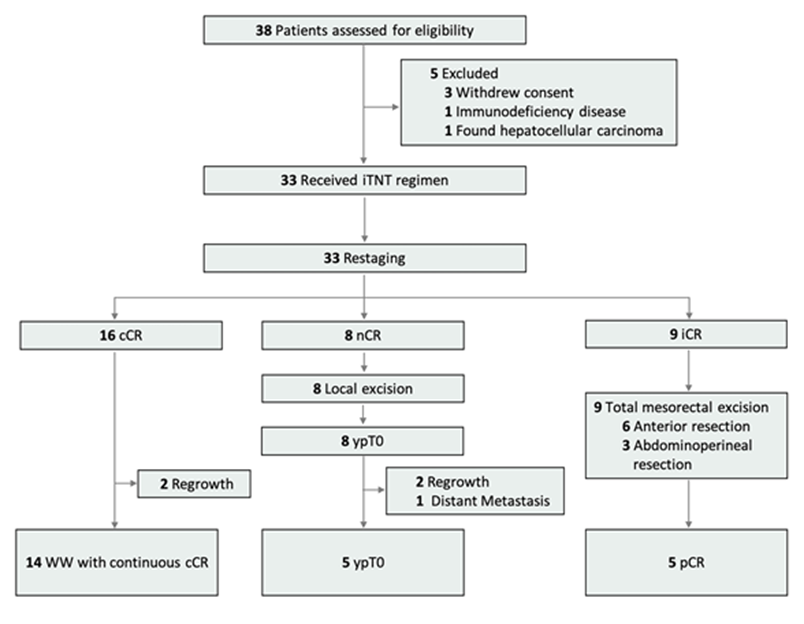
Why This Matters
For patients with low rectal cancer, traditional surgery often necessitates removal of the anus and permanent colostomy, which profoundly impacts quality of life. TORCH‑E offers a promising alternative. Through precise radiotherapy and effective systemic therapy, more patients can now retain organ function while achieving tumor control—enabling them not only to “live longer” but also to “live better.”
Future Directions
The team will proceed with randomized controlled trials to further refine and validate this strategy, aiming to extend the benefits of organ‑preserving treatment to more patients.
